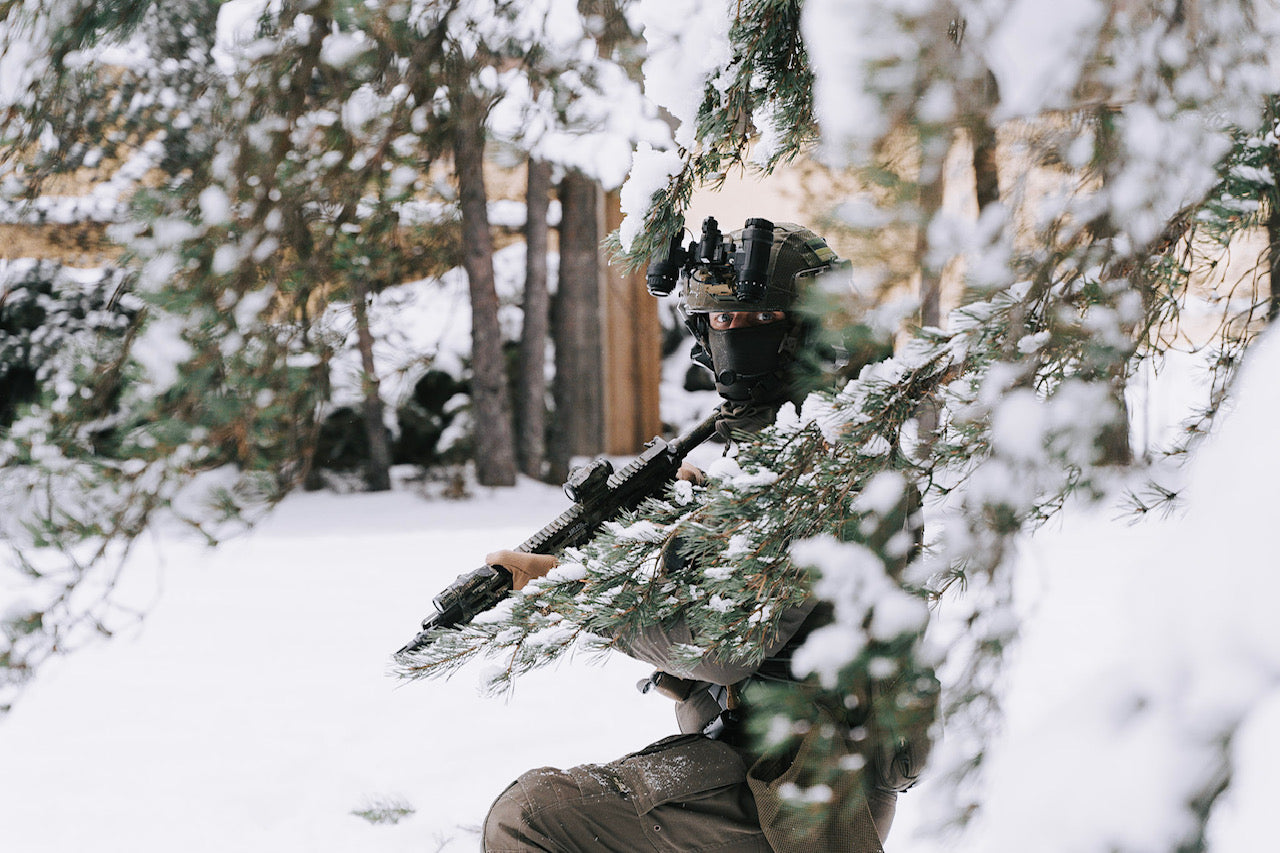

A ballistic helmet should be selected around its documented protection, coverage, fit and complete worn weight. High-cut and low-cut shells make different trade-offs, particularly when combined with hearing protection. Neither a shell shape nor a general protection label establishes performance against every threat.
Deciphering Ballistic Protection Levels
Check the helmet's actual test report, including projectiles, velocities, conditioning and deformation measurements. NIJ 0106.01 concerns helmets, whereas NIJ 0101.06 concerns body armour. A IIIA reference based on body-armour test threats is not, on its own, proof that a helmet is NIJ certified. A handgun-threat label must not be read as rifle protection.
Fragmentation performance must be read from the specific helmet’s test documentation. For a model such as the Low Cut Ballistic Helmet, check any stated STANAG 2920 V50 result together with the test fragment and conditions. V50 is a test statistic, not a guaranteed safe velocity for every fragment.
High Cut vs. Low Cut: Strategic Shell Design
The cut of your helmet determines lateral protection and the volume of gear you can comfortably integrate into your kit.
- Low Cut (Full Cut): This style offers the maximum surface area, extending over the ears to provide defense against side impacts and fragmentation. A Low Cut Ballistic Helmet is the logical choice for personnel who do not frequently utilize large over-ear communications and prioritise shell coverage around the ears.
- High Cut (Maritime/ATE): By removing the ear covers, high-cut helmets reduce weight and allow for the direct mounting of headsets. The Sestan-Busch ACH Ballistic Helmet High Cut is a premium European-made option that utilizes a high-cut design to accommodate ARC rails. This is the preferred choice for operators who need to mount headsets or lights directly to the shell to maintain a low profile.
Integrating Essential Helmet Accessories
A helmet functions as a mounting platform for specialized ballistic equipment. To ensure mission readiness, you must consider how the shell integrates with your electronics and lighting.
Communications and Hearing Protection
If you utilize electronic earmuffs, you need a mounting solution that maintains a consistent acoustic seal. Using the Earmor M12 EXFIL adapter or the M11 ARC helmet rails adapter allows you to transition your hearing protection from a headband to the helmet rails. Check both rail and headset compatibility, as well as the seal around the ear when worn with glasses and a chin strap.

Tactical Illumination and Signal
Night operations require hands-free lighting that does not clutter your field of view. The Streamlight Sidewinder Stalk is a low-profile solution that attaches to ARC rails, providing white, IR, and colored light in a single unit. For identification and safety, the Opsmen Stealth Strobe provides signalling options. Neither visible nor infrared modes guarantee that other observers cannot detect them.
Balance and External Management
Adding night vision devices or heavy lights to the front of a helmet can cause it to tilt forward, leading to fatigue. A Direct Action Counterweight Pouch can adjust balance, but also adds weight. Assess the total load rather than assuming a counterweight always reduces neck strain. Additionally, a Direct Action Fast Helmet Cover MKII or the standard Direct Action Fast Helmet Cover provides camouflage, protects the shell from abrasions, and offers loop panels for patches and cable routing.
Achieving a Precise and Secure Fit
A helmet that shifts during movement can obstruct vision and compromise fit. To find your size, measure the circumference of your head approximately 1.5 cm above the eyebrows. Professional helmets use adjustable retention systems, such as the SBW dial found on Sestan-Busch models, to provide a snug, custom fit that remains stable during a sprint.
The interior padding is equally critical for shock absorption. Systems like the PAD9 internal padding found in premium protective equipment absorb kinetic energy and reduce the forces transferred to the skull during an impact. You should also verify that your plate carrier setup does not interfere with the rear of the helmet, ensuring you maintain a full range of motion in the neck and shoulders while prone.
Choose a ballistic helmet using its documented test performance, coverage, size and compatibility with the rest of your equipment. Check each product page for stock and delivery information. Eligible members of the Estonian Defence Forces, Police, Prison Service and Rescue Service can use ESTTAC’s 10% professional discount under its terms.
Explore our full range of Ballistic Equipment and upgrade your protection today.
Related guides
Standards reference: NIJ’s active standards list. Helmet and body-armour standards are separate; consult the exact helmet’s documentation.